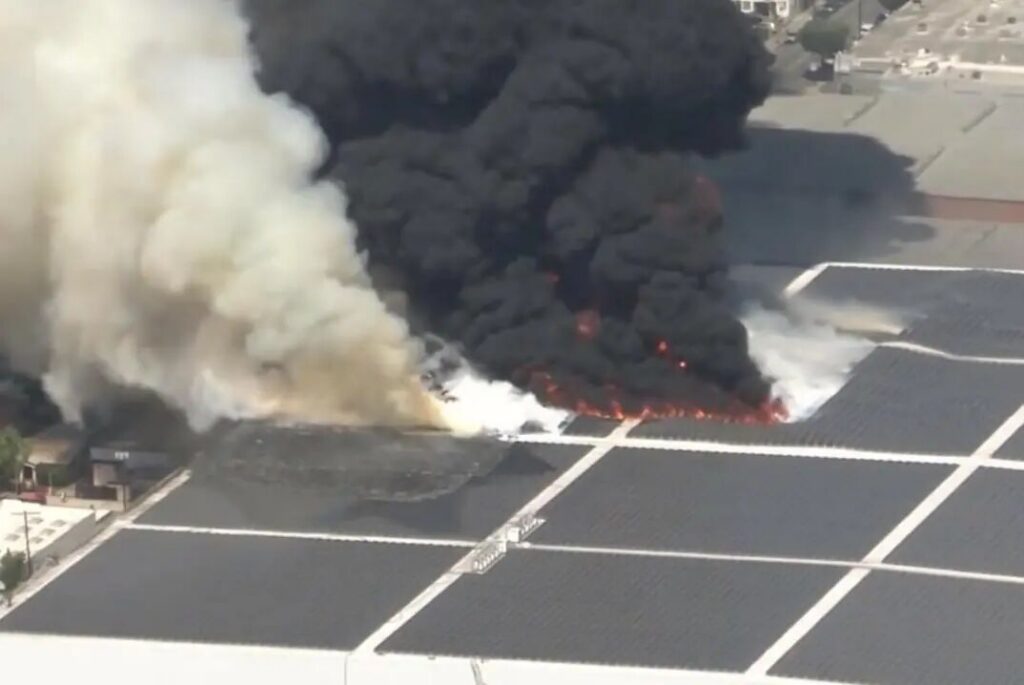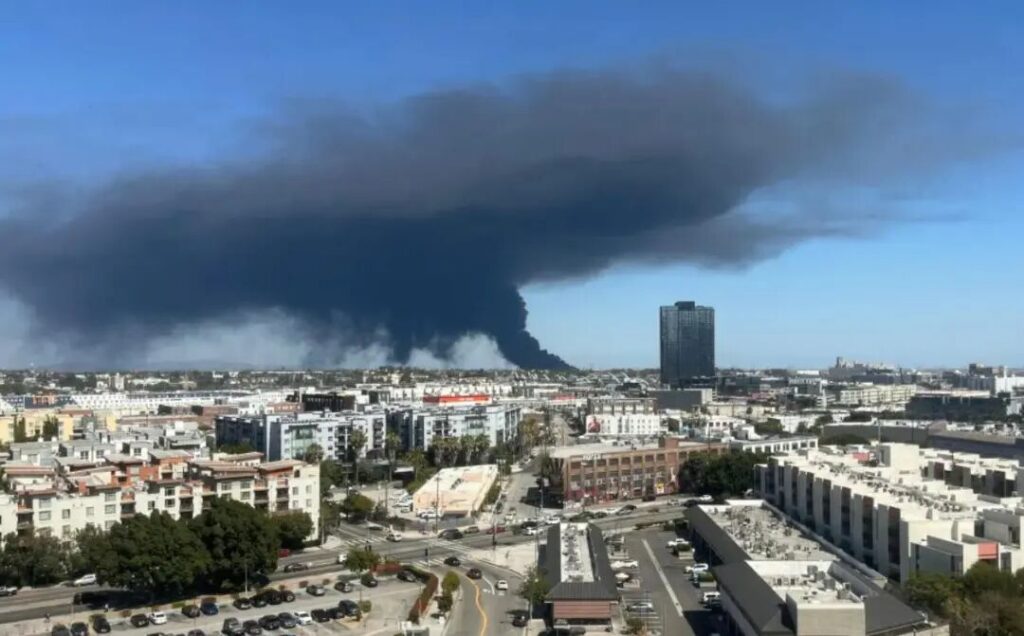
A massive fire in Los Angeles has reignited the debate over the safety of rooftop solar systems, after the fire spread to a solar plant on top of one of the city’s largest commercial warehouses. Although initial indications are that the solar system was not the cause of the fire, after the fire spread, the fire was complicated by the system’s constant voltage during daylight hours.
Los Angeles authorities declared a state of emergency after the fire, which broke out inside a large commercial storage and cooling facility, in a move aimed at providing the resources and capabilities necessary to support the efforts of firefighters and contain the incident.
According to the fire department, the damaged building covers an area of about 46,000 square meters and contains about 38.6 thousand tons of frozen food. As the fire expanded, the flames reached the solar panels installed on the roof of the building, which led to a heavy escalation of smoke and gases and raised environmental and health concerns in the neighboring areas.
Fire officials said the nature of the building made it more difficult to control the fire, with its walls containing high-density foam insulation materials that continue to burn slowly for long periods, which necessitated the use of helicopters and intensive firefighting operations from the air and the ground in an attempt to reduce the spread of fire.
Authorities have also issued orders for residents in surrounding areas to stay indoors, especially for people with respiratory illnesses or smoke allergies, while continuing to monitor air quality and potential hazards from hazardous substances or analyzing large amounts of food stored inside the facility.
This incident underscores the importance of designing commercial and industrial solar energy systems to the highest safety standards, including the provision of appropriate access corridors for fire crews and emergency separation systems, especially in industrial facilities and major storage depots. It also highlights the need to enhance fire training and equipment that includes large-scale PV systems, even when these systems are not the direct cause of the fire.